
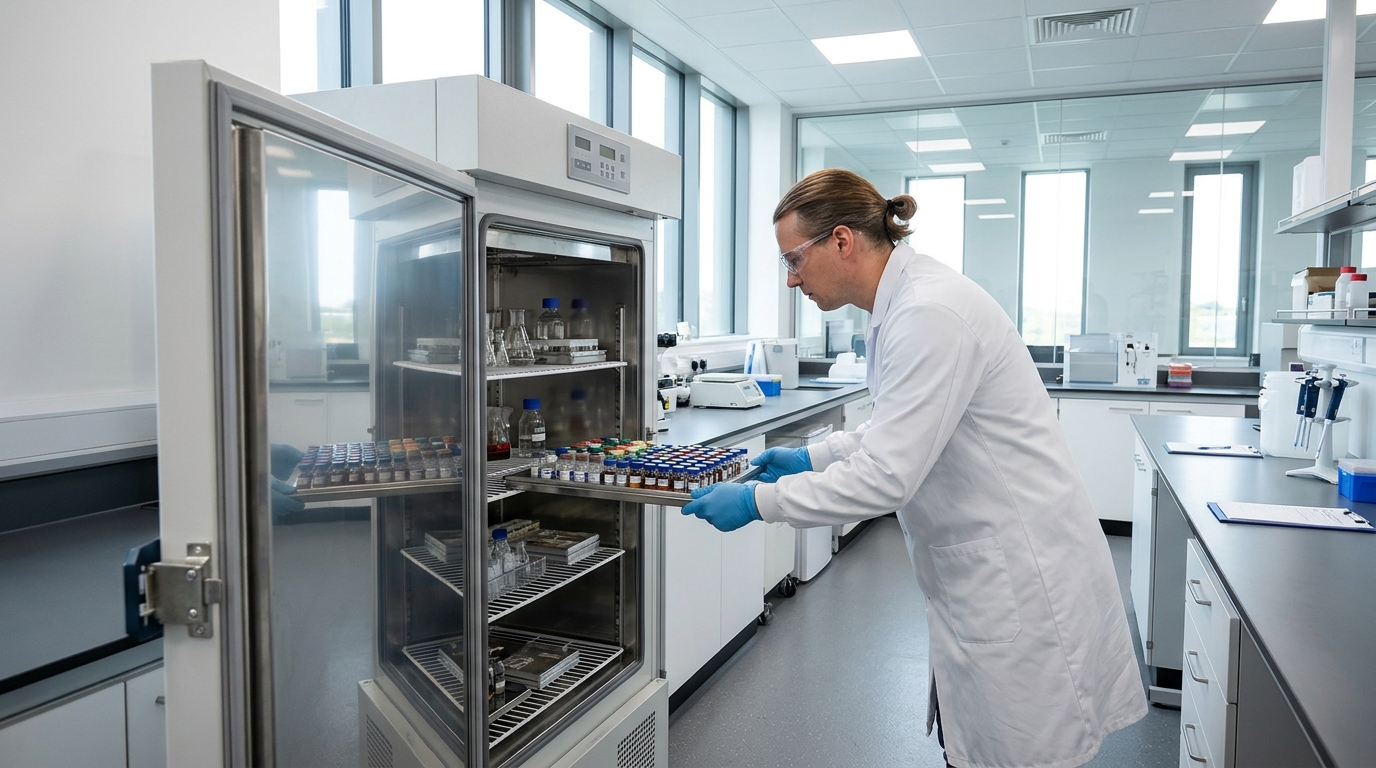
Define the change that matters
A stability study follows selected attributes over time under defined conditions. Start with the development decision: comparing formulations, investigating a storage observation or evaluating a packaging change. That purpose determines which measurements and comparisons are useful. A calendar of time points becomes meaningful when tied to a clear analytical question.
Document the material and its history
Identify the batch, formulation, preparation date and packaging. Record relevant handling and storage before the study begins. When comparing groups, define what differs and what remains consistent. This makes later observations easier to relate to the study conditions rather than to an undocumented difference in the starting samples.
Choose attributes and methods together
Select measurements that are relevant to the material and likely to help answer the study question. A chromatographic profile, component concentration and physical observation can provide different information. Discuss method suitability and consistency across time points, including how a change in preparation or measurement will be recorded.
Agree conditions, time points and evaluation rules
The plan should specify the storage environment, packaging, sampling schedule, sample allocation and reporting format. Define how results will be compared with the starting material or another study group. If a particular guideline or qualification is required, identify it at the planning stage rather than adding that expectation after data collection.
Interpret trends within the design
Review results together with the actual conditions, method information and sample history. A short or accelerated study can inform development, but its conclusions need to remain within the design and available evidence. Explain unresolved changes and follow-up questions clearly instead of presenting every study as a complete shelf-life determination.
Bring the question to your project.
Explore the relevant analytical capabilities or start a conversation about your sample.
Explore the approach